La Florida-The First 500 Years
“La Florida” was a Standard Flower Show presented by the Fort Myers-Lee County Garden Council. The theme was "Honoring Our State’s History Through Its People and Plants." The show took place on March 1 and March 2, 2013, at the Eco-living Center at Rutenberg Park in Fort Myers, Florida. It was open and free to the public. Several organizations were represented at the entrance to the Rutenberg Park building. Among them were:

Sue Moore, a board member of the Lakes Park Enrichment Foundation, was on hand to give visitors information about the work the foundation does to enhance the park’s native Florida environment and to provide services and cultural events for the community to enjoy.

Wendy Sprague, President of the Alva Garden Club, had information about the services of the University of Florida/ Lee County Extension Office

David Hamera was a representative of the Bonsai Society of Southwest Florida.
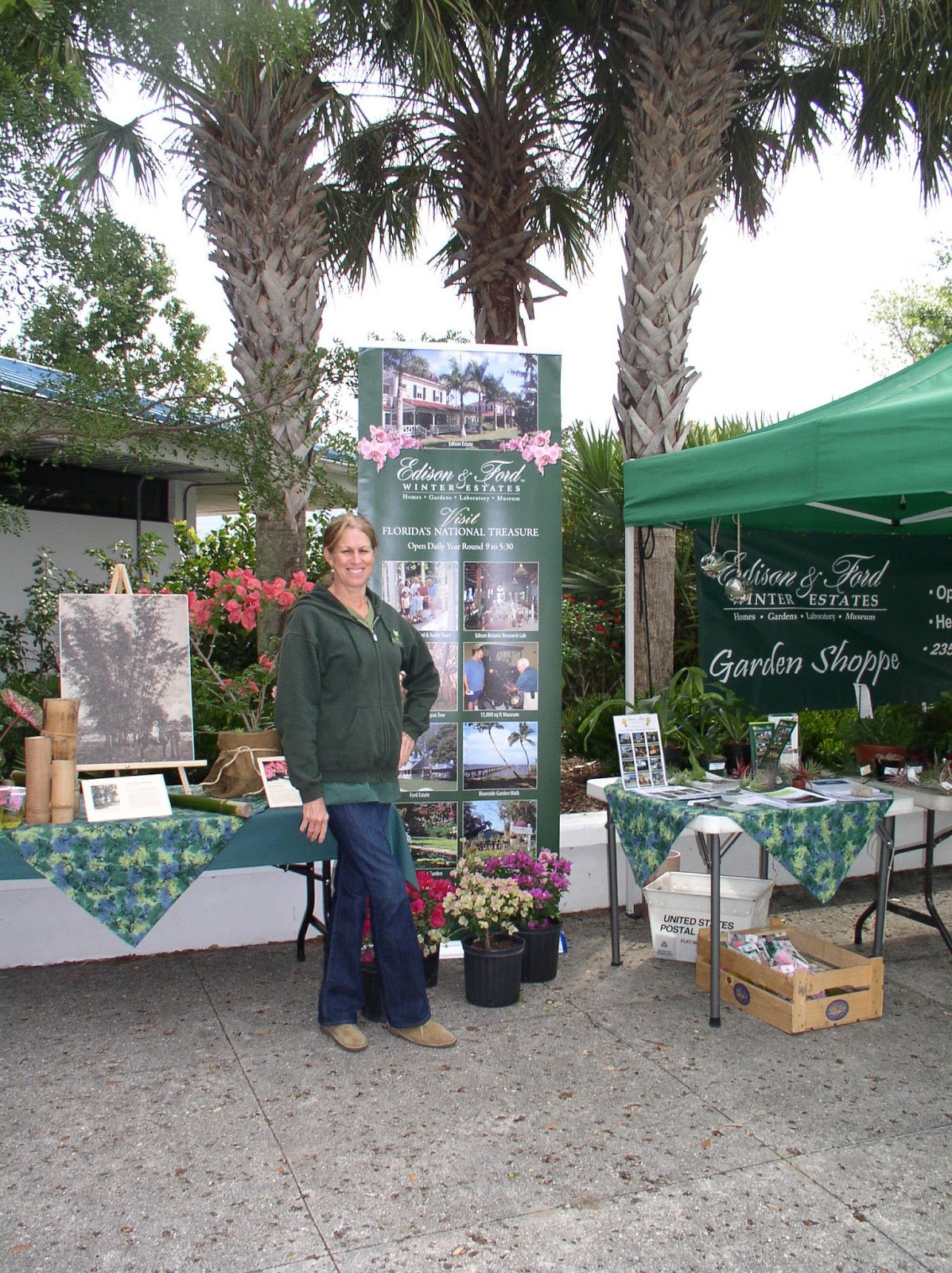
Edison and Ford Winter Estates Horticulturist Debbie Hughes

Lovely designs were displayed on the way into the show.

Barbara Murza and The Southwest Florida Orchid Society table


Barbara Murza and The Southwest Florida Orchid Society table

Sandy Kavouras, Suzy Valentine and Laura Jibben
Sandy did the Staging for the Flower Show; Suzy was the Flower Show Chairman and wore an old-time pioneer costume; and Laura was the President of the Fort Myers-Lee County Garden Council.
Sandy did the Staging for the Flower Show; Suzy was the Flower Show Chairman and wore an old-time pioneer costume; and Laura was the President of the Fort Myers-Lee County Garden Council.

The native plant display was in the entryway at Rutenberg

Since this show is historical and retrospective, the designs reflect components appropriate to the era.
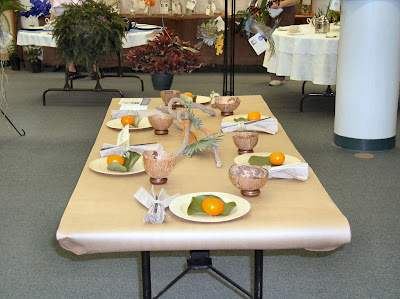
The Captain’s Table is a place setting for one person. A sea captain provided his own tableware and by necessity dined by candlelight. Fruit was usually available on ships, and sea ports on the Florida coast may have provided some interesting plant life.
The Captain’s Table is a place setting for one person. A sea captain provided his own tableware and by necessity dined by candlelight. Fruit was usually available on ships, and sea ports on the Florida coast may have provided some interesting plant life.

The Captain’s Table place setting with a hurricane lamp in a nest of vines

The Captain’s Table place setting with a little something extra to lift one’s “spirits”

The Captain’s Table place setting by Terry Pinck won the Award of Design Excellence.

These Designs reflect Florida‘s capability of “Growing Flowers and Vegetables for the Country.”

This design won the “People’s Choice” award

Sandy Kavouras and her winning design

A free-standing design: Growing Flowers and Vegetables for the Country


A free-standing design: Growing Flowers and Vegetables for the Country

A free-standing design: an assemblage related to the Space industry at Cape Canaveral

Growing flowers and Vegetables for the Country


Growing Flowers (especially gladiolus) and Vegetables for the Country

An assemblage with a business and technology theme

Railroad lines made Florida accessible as a winter playground, and men like Edison, Firestone and Ford stimulated economic activity. These designs associated with this period of growth are of any style, honoring Edison’s work.

Thomas Edison and Friends design

Thomas Edison and Friends design

Thomas Edison and Friends design

Early Florida tourism was based on fishing, hunting and playing golf: a Stretch design with golf clubs.

Florida tourism featuring water activities:
a Stretch design with sponges.

a Stretch design with sponges.

A Stretch design with cattails and duck-hunting, a pastime for Florida tourists


Old Florida Still Life design on the “Cracker” life
(so named because they cracked whips at the cattle.)

Old Florida Still Life design: cattle ranching and a rustic life style

Old Florida Still Life design: pioneer practices


Container Grown Cacti and Other Succulents


Suzy and Laura by the garden

Container Grown Succulent

Florida Friendly landscape outside of Rutenberg
The Master Gardeners of Lee County under the direction of Tom Becker created this garden of native plants.
The Master Gardeners of Lee County under the direction of Tom Becker created this garden of native plants.

Suzy and Laura by the garden

Cut Specimens and Container Grown Specimens

A view of 3 exhibits: Container Grown Flowering Plants (foreground), Florida Native Plant Material and the Jesuit Missions Still Life design (on the left)

Traditional designs featuring Florida native plant material

La Florida native plant material

La Florida native plant material


La Florida native plant material

Laura and Florida native plant material design

The Jesuit Missions Still Life design
The Jesuits established mission settlements and introduced to native Americans crops from the Spanish empire, such as sugar cane and citrus.

Close-up of the Jesuit Missions Still Life design

Container Grown Foliage Plants

Container Grown Flowering Plants


Tropical fuzzy bloomer

A “Peek at the Past” Petite design

A “Peek at the Past” Petite design

A “Peek at the Past” Petite design

A “Peek at the Past” Petite design

A “Peek at the Past “ Petite design


Early explorers in Florida discovered certain peculiar plants that seemed to grow on air or hang from trees.
A Hanging Design with Florida epiphytes

A Hanging Design with epiphytes

A Hanging Design with Florida epiphytes

A Hanging Design with epiphytes

A Hanging Design with epiphytes

“One foot in the Past” novice designs
Newer designers are asked to think of Florida's past history, while creating something of their own, within a "one square foot" space.

Novice “One Foot in the Past” design

Novice designs

Novice designs

Novice design

Cut Decorative Foliage


Cut Decorative Foliage

Philodendron frond


A Picnic Table for Six
 A Ton of Tomatoes Picnic Table for Six

"Tomatoes" Centerpiece


Orchid plants

Orchids

A Picnic Table for Six

A Picnic Table for Six


"Tomatoes" Centerpiece

Florida ladies kept the tradition of afternoon tea, using their fine china and linens and creating floral centerpieces from their own gardens.
Afternoon Tea Centerpiece
 Afternoon Tea Centerpiece

Afternoon Tea Centerpiece


Afternoon Tea Centerpiece
 Hanging design - Orchid plant


Hanging design- Bromeliads


Cut Flowers


Cut Flower


Cut Flower
and
End of Show
and
End of Show


